
jakarta servlet
=== Web项目主要由 Jakarta EE 规范 servlet.api 提供技术支持
jakarta EE 10 管理 servelt6.0 规范
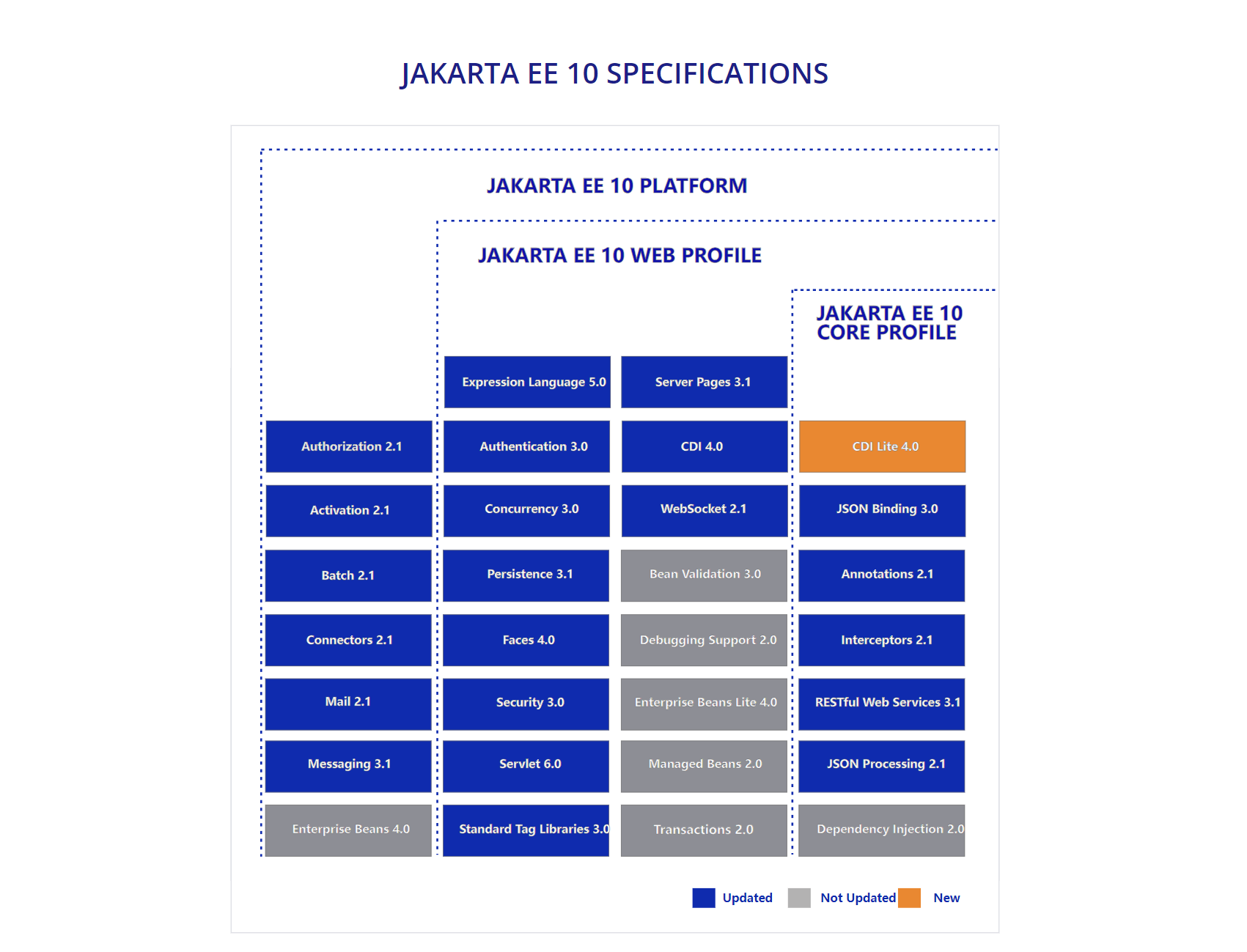
image-20240707222733952
1. 机制及项目结构
=== https://jakarta.ee/learn/docs/jakartaee-tutorial/current/web/webapp/webapp.html
servlet 执行流程

image-20240707222843230 Servlet 约定 maven目录结构
 |-- src
 |    -- main
 |         |-- java
 |         |    -- com
 |         |         -- example
 |         |              |-- controller
 |         |              |    -- Servlet.java
 |         |              |-- model
 |         |                   -- Bean.java
 |         |-- resources
 |         |    -- com
 |         |         -- example
 |         |              -- i18n
 |         |                   |-- text.properties
 |         |                   |-- text_en.properties
 |         |                   |-- text_es.properties
 |         -- `webapp
 |              |-- META-INF
 |              |    -- MANIFEST.MF
 |              |-- resources
 |              |    |-- css
 |              |    |    -- style.css
 |              |    |-- img
 |              |    |    -- logo.svg
 |              |    -- js
 |              |         -- script.js
 |              |-- `WEB-INF
 |              |    |-- beans.xml
 |              |    |-- faces-config.xml
 |              |    `-- web.xml
 |              |-- favicon.ico
 |              -- index.xhtml
 `-- pom.xml
Servlet 实现者 类加载顺序机制 加载实现者【自身需要类 | 项目第三方类 | 项目类】
Servelt3.0 起提供注解及API注册 Servelt | Filter 等组件不再需要 web.xml 文件
pom.xml
<dependency>
    <groupId>jakarta.servlet</groupId>
    <artifactId>jakarta.servlet-api</artifactId>
    <version>6.0.0</version>
    <scope>provided</scope>
</dependency>
2. 声明周期
=== servlet 接口中约定了 其 api 的执行机制
官方:https://jakarta.ee/specifications/platform/10/apidocs/jakarta/servlet/servlet
jakarta.servelt.Servlet
package jakarta.servlet; import java.io.IOException; public interface Servlet { void init(ServletConfig servletConfig) throws ServletException; ServletConfig getServletConfig(); void service(ServletRequest request, ServletResponse response) throws ServletException, IOException; String getServletInfo(); void destroy(); }- servlet 要求被 URL 绑定,以使得在访问URL时能映射到对应servlet
- init -- 当servlet对象被创建后进行调用并可获得其配置
- service -- 每次执行到该servlet时总是调用service方法并获得当前请求、相应对象
- destory -- 当servlet对象被销毁前调用 执行清理操作
3. HttpServlet
=== jakarta.servelt.http.HttpServlet 是对 Servlet HTTP 协议的实现
HttpServlet 将根据生命周期执行到 service 生命周期方法后
- 根据当前请求方式
- 执行
- doGet
- doPost
- doPut
- doDelete
- doXxx 一些列对应 HTTP 请求方式方法上
- 执行
- 根据当前请求方式
核心代码执行机制
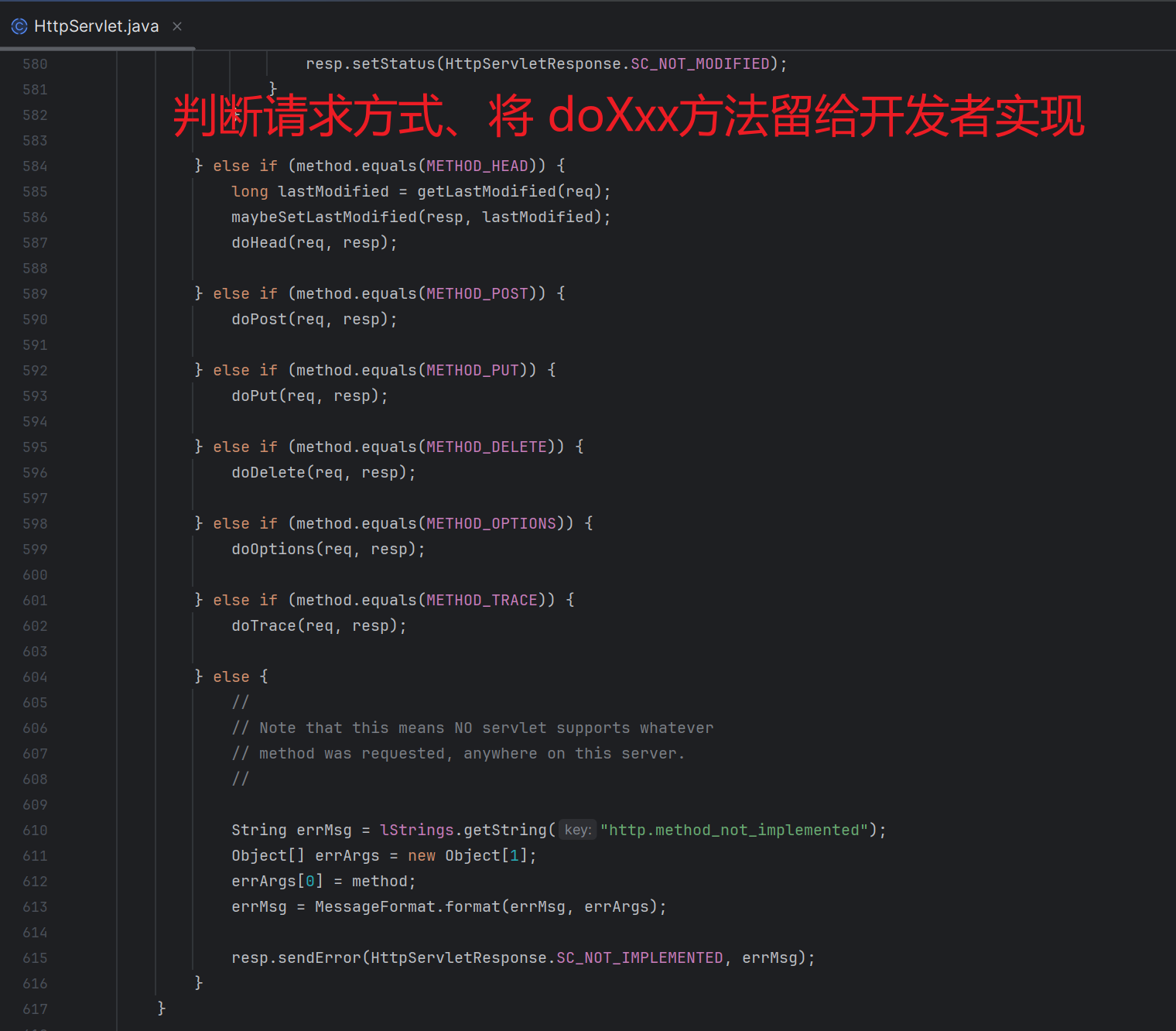
image-20240707225824285
4. Cargo
=== cargo 是maven官方提供的运行 jakarta EE Servlet.api 的容器插件
pom.xml
<build>
    <plugins>
        <plugin>
            <groupId>org.apache.maven.plugins</groupId>
            <artifactId>maven-war-plugin</artifactId>
            <version>3.3.2</version>
        </plugin>
        <plugin>
            <groupId>org.codehaus.cargo</groupId>
            <artifactId>cargo-maven3-plugin</artifactId>
            <version>1.10.10</version>
            <configuration>
                <container>
                    <containerId>tomcat10x</containerId>
                    <type>embedded</type>
                </container>
                <deployables>
                    <deployable>
                        <type>war</type>
                        <location>
            ${project.build.directory}/${project.build.finalName}.war
                        </location>
                        <properties>
                            <context>/web</context>
                        </properties>
                    </deployable>
                </deployables>
            </configuration>
        </plugin>

    </plugins>
</build>
mvn [cargo 运行 war 项目 需先对 项目进行打包]
mvn clean package cargo:run
5. Servlet高级进阶
@GetUrlMapping
package com.example.controller.annotaction;

import java.lang.annotation.ElementType;
import java.lang.annotation.Retention;
import java.lang.annotation.RetentionPolicy;
import java.lang.annotation.Target;

@Target(ElementType.METHOD)
@Retention(RetentionPolicy.RUNTIME)
public @interface GetUrlMapping {
    String url ();
}
UserController.java
package com.example.controller;


import com.example.controller.annotaction.GetUrlMapping;
import jakarta.servlet.http.HttpServletRequest;
import jakarta.servlet.http.HttpServletResponse;

import java.util.HashMap;
import java.util.Map;


public class UserController  {

    @GetUrlMapping(url = "/user/login")
    public String login(HttpServletRequest request,
                        HttpServletResponse response){
        System.out.println("login...");

        return "login";
    }

    @GetUrlMapping(url = "/user/register")
    public Map<String, String> register(HttpServletRequest request,
                                        HttpServletResponse response){
        System.out.println("register...");

        Map<String, String> map = new HashMap<>();

        map.put("user", "register");

        return map;
    }

}
BaseGetServlet.java
package com.example.springwebmvc;

import com.example.controller.annotaction.GetUrlMapping;
import com.example.util.JsonHelper;
import jakarta.servlet.Servlet;
import jakarta.servlet.ServletException;
import jakarta.servlet.annotation.WebServlet;
import jakarta.servlet.http.HttpServlet;
import jakarta.servlet.http.HttpServletRequest;
import jakarta.servlet.http.HttpServletResponse;

import java.io.File;
import java.io.IOException;
import java.lang.reflect.Constructor;
import java.lang.reflect.Method;
import java.util.ArrayList;
import java.util.List;


@WebServlet(name = "BaseGetServlet", value = "/*")
public class BaseGetServlet extends HttpServlet {


    @Override
    protected void doGet(HttpServletRequest request,
                         HttpServletResponse response) throws ServletException, IOException {

        String contextPath = request.getServletContext().getContextPath();
        String requestURI = request.getRequestURI();
        String URL = requestURI.substring(contextPath.length(), requestURI.length());
        System.out.println("URL = " + URL);

        // SpringMVC 会 解析参数作文章

        String path = "com/example/controller";
        File file = new File("src/main/java/" + path);

        List<Class<?>> classList = new ArrayList<>();

        File[] files = file.listFiles();
        for (File f : files) {
            if (f.isFile()) {
                String className = f.getName().replace(".java", "");
                String replace = path.replace('/', '.');

                String classFullName = replace + "." + className;
                System.out.println("classFullName = " + classFullName);

                try {
                    Class<?> aClass = Class.forName(classFullName);

                    classList.add(aClass);
                } catch (ClassNotFoundException e) {
                    throw new RuntimeException(e);
                }
            }
        }

        for (Class<?> aClass : classList) {

            Method[] methods = aClass.getMethods();
            for (Method method : methods) {
                GetUrlMapping urlMapping = method.getDeclaredAnnotation(GetUrlMapping.class);

                if (urlMapping != null) {
                    if (urlMapping.url().equals(URL)) {
                        try {

                            // 反射目标类 创建对象
                            Constructor<?> constructor = aClass.getDeclaredConstructor();
                            Object o = constructor.newInstance();


                            // 前 (判断有没有拦截器 调用 before)

                            // 反射调用当前 URL 匹配的方法
                            // SpringMVC 支持任意参数
                            Object result = method.invoke(o, request, response);

                            // 后 (判断有没有拦截器 调用 after)

                            if (method.getReturnType() == void.class) {
                                return;
                            }

                            // 根据目标方法的返回值写到客户端
                            JsonHelper.responseToWebClient(result, response, "UTF-8");

                            // 后后 (判断有没有拦截器 调用 afterAfter)

                            return;

                        } catch (Exception e) {
                            // 预留全局异常
                        }
                    }
                }

            }

        }

    }
}
6. Servlet注册方式
Servlet支持 web.xml , 注解 、API三种方式
6.1 web.xml
<servlet>
    <servlet-name>servletName</servlet-name>
    <servlet-class>x.y.z.servletClassName</servlet-class>
</servlet>
<servlet-mapping>
    <servlet-name>servletName</servlet-name>
    <url-pattern>/url</url-pattern>
</servlet-mapping>
6.2 @WebServlet
package com.example.ideamabenjavaweb;


import jakarta.servlet.annotation.WebServlet;
import jakarta.servlet.http.HttpServlet;
import jakarta.servlet.http.HttpServletRequest;
import jakarta.servlet.http.HttpServletResponse;

import java.io.IOException;

@WebServlet(name = "someoneServlet", value = "/someoneServlet")
public class SomeoneServlet extends HttpServlet {

    public void doGet(HttpServletRequest request, HttpServletResponse response)
        throws IOException {

        // do something for handling get request...

    }

}
6.3 ServletContext
package com.example.ideamabenjavaweb;


import jakarta.servlet.ServletContext;
import jakarta.servlet.ServletRegistration;
import jakarta.servlet.annotation.WebServlet;
import jakarta.servlet.http.HttpServlet;
import jakarta.servlet.http.HttpServletRequest;
import jakarta.servlet.http.HttpServletResponse;

import java.io.IOException;

@WebServlet(name = "someoneServlet", value = "/someoneServlet")
public class SomeoneServlet extends HttpServlet {

    public void doGet(HttpServletRequest request, HttpServletResponse response)
        throws IOException {
        // 现实中这种方式没有用,多此一举
        ServletContext servletContext = request.getServletContext();

        ServletRegistration.Dynamic dynamic =
            servletContext.addServlet("servletName", "servletClassName");

        dynamic.addMapping("/url");

    }

}
6.4 ServletContainerInitializer.java
package jakarta.servlet;

import java.util.Set;

/**
 * Interface which allows a library/runtime to be notified of a web application's startup phase and perform any required
 * programmatic registration of servlets, filters, and listeners in response to it.
 *
 * <p>
 * Implementations of this interface may be annotated with {@link jakarta.servlet.annotation.HandlesTypes HandlesTypes},
 * in order to receive (at their {@link #onStartup} method) the Set of application classes that implement, extend, or
 * have been annotated with the class types specified by the annotation.
 *
 * <p>
 * If an implementation of this interface does not use <tt>HandlesTypes</tt> annotation, or none of the application
 * classes match the ones specified by the annotation, the container must pass a <tt>null</tt> Set of classes to
 * {@link #onStartup}.
 *
 * <p>
 * When examining the classes of an application to see if they match any of the criteria specified by the
 * <tt>HandlesTypes</tt> annotation of a <tt>ServletContainerInitializer</tt>, the container may run into classloading
 * problems if any of the application's optional JAR files are missing. Because the container is not in a position to
 * decide whether these types of classloading failures will prevent the application from working correctly, it must
 * ignore them, while at the same time providing a configuration option that would log them.
 *
 * <p>
 * Implementations of this interface must be declared by a JAR file resource located inside the
 * <tt>META-INF/services</tt> directory and named for the fully qualified class name of this interface, and will be
 * discovered using the runtime's service provider lookup mechanism or a container specific mechanism that is
 * semantically equivalent to it. In either case, <tt>ServletContainerInitializer</tt> services from web fragment JAR
 * files excluded from an absolute ordering must be ignored, and the order in which these services are discovered must
 * follow the application's classloading delegation model.
 *
 * @see jakarta.servlet.annotation.HandlesTypes
 *
 * @since Servlet 3.0
 */
public interface ServletContainerInitializer {

    public void onStartup(Set<Class<?>> c, ServletContext ctx) throws ServletException;
}
6.5 xyz.jar!\META-INF\services\jakarta.servlet.ServletContainerInitializer
org.springframework.web.ServletContainerInitializerImpl


@HandlesTypes(CustomServletContainerInitializer.class)
class ServletContainerInitializerImpl implements ServletContainerInitializer {

	public void onStartup(Set<Class<?>> c, ServletContext ctx) throws ServletException {

	}
}

interface CustomServletContainerInitializer {

    onStartup(ServletContext servletContext)
}